
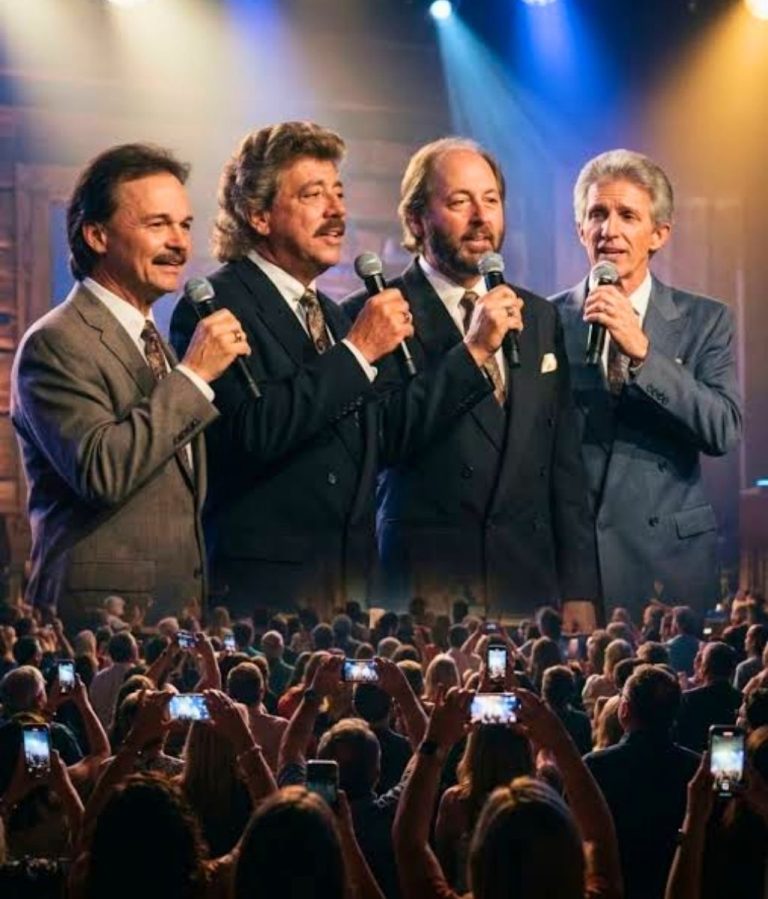
There was something unmistakably comforting about an evening with The Statler Brothers. Whether it was a modest small-town theater glowing beneath soft stage lights or a snow-dusted auditorium filled with families in their Sunday best, their presence carried warmth that reached far beyond entertainment.
For countless Americans — especially those who grew up in the 1970s, 80s, and 90s — the Statler Brothers were not simply performers. They were a tradition.
Their gospel tours became spiritual gatherings as much as concerts. Audiences didn't just clap along; they listened with reverence. The quartet's harmonies, grounded in deep faith and disciplined precision, felt less like performance and more like testimony. When they sang hymns rooted in scripture, their four-part blend created a stillness in the room that few artists could achieve.
It wasn't spectacle that defined those nights. It was sincerity.
Every year, their Christmas concerts became anticipated events in towns across America. Families marked their calendars months in advance. Parents brought children who would later bring their own families. The decorations were festive but never extravagant — wreaths, soft lighting, maybe a simple nativity backdrop — all designed to focus attention on the music itself.
When they sang carols, the effect was deeply personal. It felt like being gathered around a living room fire with voices you trusted. Their annual holiday specials carried that same spirit. There was laughter woven between sacred songs, lighthearted storytelling balanced with moments of profound stillness. It was a rare blend of warmth and worship.
One of their most ambitious and spiritually resonant projects was The Holy Bible: New Testament. That recording stands apart even within their celebrated catalog. Instead of simply performing gospel standards, they presented scripture through music in a way that was both accessible and deeply reverent.
Listeners often describe experiencing chills during those recordings. The bass anchored each passage. The tenor rose gently without overpowering. The baritone and lead lines intertwined with precision born from decades of singing side by side. It was harmony shaped by shared belief.
For many fans, those sacred songs became part of life's most meaningful moments — baptisms, memorial services, quiet evenings of reflection. Their gospel recordings were played not just for enjoyment, but for comfort.
What made their spiritual music especially powerful was the absence of pretense. They never appeared to be chasing trends or adapting to changing industry demands. Instead, they leaned into their roots. Their sound remained grounded in traditional arrangements, steady rhythms, and clear storytelling.
Even today, when those recordings play, something remarkable happens. The passage of time seems to soften. The harmonies still carry the same steady reassurance. For listeners who may now be in their fifties, sixties, or seventies, the music connects them to earlier chapters of their lives — to parents who once hummed along, to church pews filled with familiar faces.
The Statler Brothers understood that gospel music is not merely about melody. It is about message. Their voices, blended with careful discipline, delivered that message with humility and conviction.
In an era often marked by noise and distraction, their sacred recordings remain clear and uncluttered. They remind listeners of something enduring — faith that holds steady, harmony that bridges differences, and music that serves rather than seeks attention.
From small-town stages to nationally televised Christmas specials, from cherished hymns to the profound passages of the New Testament album, their sacred legacy continues to echo.
And perhaps that is why their songs still feel like a hymn carried from another era — not fading into silence, but rising gently, as if lifted from heaven's harmony itself.